
Do Smoke Alarms Need to Be Interconnected in Queensland? Essential 2026 Guide for Safer Mount Low Homes
Yes. Queensland smoke alarm laws require interconnected smoke alarms in domestic dwellings. By 1 January 2027, all remaining Queensland homes must have compliant photoelectric alarms installed in the required locations and connected so that when one alarm detects smoke, all required alarms sound together.
For homeowners in Mount Low, this means older standalone alarms may need to be upgraded before the deadline. The requirements already apply to new and substantially renovated homes, as well as homes being sold or leased.
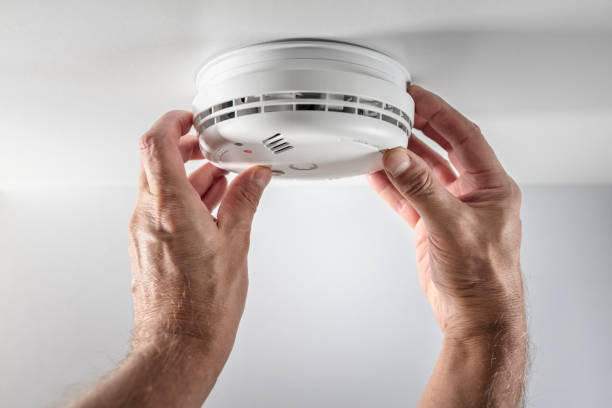
What Are Interconnected Smoke Alarms?
Interconnected smoke alarms communicate with each other throughout your home. When one alarm detects smoke, every connected alarm activates.
This is different from a standalone smoke alarm, which only sounds in the area where smoke is detected. Interconnection can give people in bedrooms or other parts of the home earlier warning.
The connection between alarms can be wired, wireless or a combination of both, depending on the property and the alarm system being used.
What Does Queensland Law Require in 2026?
Queensland introduced updated smoke alarm requirements in stages beginning in 2017. The final stage takes effect on 1 January 2027, when the requirements extend to all remaining domestic dwellings.
Compliant alarms must generally:
- Be photoelectric smoke alarms
- Comply with Australian Standard AS 3786-2014
- Be interconnected with the other required alarms
- Be less than 10 years old
- Operate correctly when tested
- Use an approved power source suitable for the property
For homeowners in Mount Low, Burdell, Deeragun and Bushland Beach, checking existing alarms now can help avoid leaving upgrades until close to the deadline.
Where Do Smoke Alarms Need to Be Installed?
Having the right type of smoke alarm is only one part of compliance. Placement also matters.
Queensland requirements generally call for smoke alarms:
- In every bedroom
- In hallways connecting bedrooms with the rest of the home
- Between bedrooms and other areas if there is no hallway
- On every storey of the property
- In the likely path of travel towards an exit where a level has no bedrooms
This can be especially relevant for homes in Beach Holm, Bohle, Kirwan and Mount Louisa, where floorplans may include separate sleeping areas, extensions or larger family layouts.
Alarm placement should also take into account nearby walls, ceiling fans, air-conditioning vents and light fittings. Poor placement can affect how quickly smoke reaches the alarm.
Do Existing Mount Low Homes Need to Upgrade?
Yes, if your current alarms do not meet the current requirements.
All existing private homes, townhouses, units and manufactured homes in Queensland must meet the updated rules by 1 January 2027. Homes being sold or leased are already subject to the requirements.
If you are unsure when your alarms were installed, check the manufacturing date and test each unit. Alarms more than 10 years old generally need to be replaced.
Homeowners in West End, Hyde Park, Pimlico and Aitkenvale should also check whether their alarms are still standalone. Older properties may still have systems installed under previous requirements.
Hardwired vs Battery-Powered Smoke Alarms
Not every Queensland home requires exactly the same setup.
Some existing homes can use compliant alarms powered by a non-removable 10-year battery. However, if an existing smoke alarm is connected to 240V mains power, its replacement must remain hardwired.
This can be relevant for established homes in Annandale, Condon and Douglas, where existing wiring may already support hardwired smoke alarms.
New homes and substantially renovated homes generally require hardwired alarms. Wireless interconnection may also be used in suitable systems, allowing alarms to communicate without running an interconnection cable between every unit.
Why Interconnected Smoke Alarms Matter
The main benefit of interconnected smoke alarms is that a warning is not limited to one room.
For example, if smoke is detected in a living area while you are asleep, alarms in bedrooms can activate at the same time. This may give occupants more time to respond.
For larger homes in Cranbrook, Garbutt, Currajong and Wulguru, this can be particularly useful where bedrooms sit some distance from kitchens, garages or living areas.
You should still test alarms regularly and keep them clean. Dust, age and faults can affect performance even when the system is correctly installed.
Can You Install Smoke Alarms Yourself?
That depends on the type of alarm.
Homeowners can install suitable 10-year non-removable battery alarms where they are permitted and appropriate for the property.
Hardwired 240V smoke alarms are different. Because they connect to the home’s mains electrical supply, installation and replacement must be completed by a licensed electrician.
If your existing alarms are hardwired, do not attempt to alter the wiring yourself. An electrician can check the existing circuit, alarm type and interconnection method before completing the work.
Common Signs Your Smoke Alarms Need Attention
Your smoke alarm system may need checking if:
- Your alarms are more than 10 years old
- Only one alarm sounds when tested
- Some alarms are not interconnected
- A bedroom does not have an alarm
- Your alarms use older ionisation technology
- A hardwired alarm has stopped working
- You cannot confirm compliance with AS 3786-2014
Homes across Townsville and surrounding suburbs can vary significantly in age and electrical layout, so the correct solution depends on the existing installation.
FAQs About Interconnected Smoke Alarms
Do all smoke alarms in Queensland need to be interconnected?
Required smoke alarms must be interconnected so that all alarms activate when one detects smoke. The requirement applies to all remaining Queensland domestic dwellings from 1 January 2027.
Do smoke alarms need to be installed in every bedroom?
Yes. Queensland requirements include smoke alarms in each bedroom, relevant hallways and on every storey of the home.
Can smoke alarms be interconnected wirelessly?
Yes. Depending on the system, alarms can be interconnected through wiring, wireless technology or a combination of both.
Do I need an electrician to install smoke alarms?
You need a licensed electrician for hardwired 240V smoke alarms. Suitable 10-year battery alarms may be installed without electrical work where they are permitted.
When to Call a Professional
Call a licensed electrician if you have hardwired alarms, need to replace existing 240V units, are unsure whether your current system is compliant, or need additional hardwired alarms installed.
MCT Electrical can assist homeowners in Mount Low and nearby areas including Deeragun, Burdell, Bohle, Kirwan, Annandale and Townsville with smoke alarm installation and system checks.
If your property has older alarms, renovations or a mixture of alarm types, a professional assessment can help confirm whether your setup meets Queensland requirements before the 2027 deadline.
Conclusion
Queensland homes must transition to compliant interconnected smoke alarms by 1 January 2027. The alarms need to be photoelectric, correctly positioned, compliant with AS 3786-2014 and interconnected so they activate together.
Mount Low homeowners can start by checking alarm age, testing each unit and confirming whether every bedroom and required area has adequate coverage. If your alarms are hardwired or you are unsure whether your current system meets the requirements, contact MCT Electrical to arrange a smoke alarm assessment and installation.
